Monday, December 13, 2010

Man in the Eagle-Crested Mirror and his Character Study

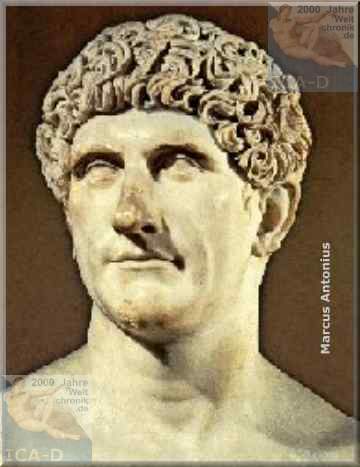
Centurion is one of the most enjoyable films I've seen this year. It has far from the character development of Gladiator, but it does however portray Roman Legatus Titus Flavius Virilus in a good enough light to remind me, and anyone else who studies their Roman generals, of Marcus Antonius, who cast his lot with Cleopatra instead of Octavian. Virilus was of course a fictional character, but I feel sure that Marcus Antonius served as his inspiration.
Both men were incredibly popular within their legions, both men were heavy drinkers, and both men were great generals, tough and fully ready to defend the Empire/Republic. All that was missing in the comparably short story of Virilus was relationships with several women, especially with an Egyptian Queen. The cunning charms of Cleopatra were far from present in Centurion, replaced in full by the devious intentions of Etain, a Pict warrior/tracker from the highlands of Britannia. The love/convenient relationship between Antonius and the Macedonian Queen of Egypt is replaced with disdainful, vengeful one between Virilus and Etain, sworn enemies in every since of the word.                                                                                                                                                                              
Dominic West was cast in Centurion as Virilus, and Antonius being one of my favorite figures from history, the fictional general immediately reminded me of the actual one. We're first introduced to Virilus as he hangs out with his legions, entangling himself in an arm wrestling match with one of his soldiers, the rest placing bets and shouting their picks. I truly believe this is how Antonius interacted with his soldiers, as the Roman historian Suetonius reports that Antonius knew many of men by name and often ate meals with them at the common mess table. Virilus and Antonius were separated by almost 250 years, but the similarities are there. In the next scene that we see Virilus, he's washing himself with another soldier in a pretty common manner, hangover and all. A rider comes into camp and insists that he talk to Virilus, whom he's never seen before. He shouts at the real Virilus and demands an audience with the general, threatening a flogging. Virilus shouts back, telling the rider that he is the Legatus and that he could have the rider flogged instead. This was the type of man Antonius was, spending so much time with his infantry that he could've been mistaken as one of them. He often lowered himself to their status, but he was also quick to remind those out of line that he was still the man in charge. He sincerely cared about his troops and they adored him for it. Even lowering himself enough to be found frequently in their encampments, they respected him. Virilus is seen in the same light in Centurion.

Russell Crowe's character in Gladiator is seen in a similar light as Virilus and Antonius, and I'm sure that many other general's in Rome's long history shared the same sort of traits. But I continually study the character of Antonius and both he and Virilus were men's men. Antonius immediately came to mind when I saw the characterization of Titus Flavius Virilus in Centurion. I think that in terms of writing a fictional Roman general, the best possible muse would be a man like Marcus Antonius, one who was loved by men, adored by his women, and etched into Roman history as admirable soldier with a heart of gold and endearing reckless abandon when it came to excess.

These two pictures are of actor James Purefoy as Mark Antony in the HBO series Rome - the best on-screen Antony I've ever seen.
I was going to further explore the personality of Antonius in another blog, but while I'm on the subject, I'll indulge myself. He was a passionate man with a "live fast, die young, leave a good-looking corpse" sort of mentality. He was a true Grecophile, meaning that he loved all things Greek. The Romans claimed their roots from the Greek Aeneas, and in turn, Antonius claimed his roots from Hercules. As men of power claiming divine status was popular during the Roman Republic and Rome Empire, Antonius called himself the earthly incarnate of the Greek god of wine and free love, Dionysus, and his personality and habits of excess matched the qualities. Antonius had a taste for exotic things. His relationship with Romen women, whether wife or mistress, never lasted, as he was more inclined to endulge into relationships with Glaphyra, princess of Cappadocia, and most famously, Cleopatra VII of Egypt. Antonius probably fell in love with Cleopatra at some point, but he was surely enthralled as well by the levels of excess in her kingdom and the fact she was descended from the Macedonian Greek line of Ptolemy I Soter and Alexander the Great - famous Greeks he surely greatly admired. He probably lost the Battle of Actium simply because he failed to listen to his Legatus, Publius Canidius Crassus, who told him they should fight Octavian's army on land instead of at sea. He was proud and stubborn and full of bravado, thinking he could defeat the lesser general in any situation presented. He was the equivalent of a modern football star who walks around quoting coaching great Vince Lombardi. He was the equivalent of a modern military general who fervently studies the battle tactics and campaigns of Patton or Napoleon. He was the equivalent of UFC fighter Marcus "The Irish Handgrenade" Davis, who's an American fighter but boasts proudly his Irish roots.
Marcus Antonius was one of a kind, a true inimitable in every sense of the word, every bit as fascinating as the Roman Republic he was a product of. 

Tuesday, December 7, 2010

The Borgias - the Corleone Family of the Renaissance

Devotion to family.
Ambition.
Murder.


These are the attributes in which the Corleone family from The Godfather films share with the Borgias of Renaissance Italy, the papal ladder-climbers who made alliances through marriage and enemies through murder and mayhem. Usually, I'm pretty good at determining where last names came from. I do well at Jeopardy! because I guess where a question's subject is from just based on their name. I know that the Borgias were a Spanish-Italian family, but I'm not entirely sure which of these two the name Borgia is from. It sounds Italian, but all the Borgias, except the daughter, have Spanish names - Rodrigo, Juan, Cesare, and Lucrezia. The TV show has compared its content to a Renaissance Godfather or Sopranos - not sure which. But I can definitely see the parallels with the family Coreleone. Sometime in 2011, Showtime will be a airing a series on the Borgias (seen abovie), which is enough information in itself to make me want to subscribe to Showtime.

As for the real Borgias, Rodrigo, the patriarch, bribed his way into the position of Pope in Rome under the title/name Alexander VI. Pope was the top spot in all the Italian territories, and by doing this, he therefore controled all of Italy, which was during the Renaissance period a group of divided city-states. In the TV series, Rodrigo will be played by Jeremy Irons. Sure, he's an English actor, but he does sort of look Spanish-Italian, especially in the above picture. Rodrigo had three sons and one daughter. The two eldest sons, Juan and Cesare, and the daughter, Lucrezia, were by far the most significant. Lucrezia, golden-haired despite her ethnicity which usually boasts dark features, was Rodrigo's pawn - but one he loved very much. She was a great intrument in forming alliances with other city-states. Her first marriage was to Giovanni Sforza. When Rodrigo no longer needed the alliance with the Sforzas, he seeked to annul his daughter's marriage. Being the top Catholic, this wasn't an easy task, as Catholicism forbids divorce. Rodrigo produced a story in which he claimed Giovanni was impotent, which probably wasn't true. This was really the only way in which an annulment could be achieved, except for murder. For fear of this own life, Giovanni eventually accepted the claim that he was impotent and fled Rome before he could be murdered. One rumor is that Lucrezia had warned Giovanni that his life was in danger.


Her next marriage was to Alfonso of Aragon, whom she reportedly fell in love with at first sight. Her brother, Cesare, at first liked Alfonso (it was outside of his nature to like anyone), but this of course didn't last. Cesare was jealous of Alfonso. He had had a bout with syphilis that had left his face scarred. He reportedly began to wear black and to wear masks. This, and Lucrezia's lack of attention towards her brother, made Cesare hate the good-looking Alfonso even more. While leaving the Borgia household one night, Alfonso was attacked on the staircase by a heavily-cloaked man. Surpringly, he survived the sword attack, and later, while in recovery, he was strangled to death. These attacks were probably not performed by Cesare, but they were surely perpetuated by him. Lucrezia was heartbroken, and probably never forgave her brother.

Juan Borgia was named Generallisimo in his father's papal army, a title his younger brother, Cesare, wanted for himself. Juan had become Rodrigo's right hand man and this angered Cesare. In 1497, one night after the two had dined with their mother, Vannozza dei Cattannei, the brothers left together and disappeared down a dark alley. The following morning, Juan was dragged from the Tiber River, murdered. Cesare was and is the obvious choice for the assassin, but Alexander VI, who loved both of his sons, didn't want to believe that one son had killed the other. Cesare was subsequenly appointed to the title of Generalissimo and led his father's papal army in place of Juan. In an ironic twist of fate, Cesare was killed on the battlefield leading the army he'd murdered to command. In a final event before Martin Luther set into motion the Protestant Reformation, Alexander VI aka Rodrigo Borgia was poisoned and killed. Lucrezia is the only major Borgia player who didn't die an agonizing death.

According The Borgias director, Neil Jordan, Mario Puzo's Corleone family was based on the corrupt Renaissance family. This is something I've just come across while writing this blog, so I suppose my comparison is a pretty good one. Mario Puzo, author of The Godfather, also wrote a book called The Family, about the Borgias. This was Puzo's final book before his death and now I'm really interested in taking a peek at The Family myself.

The Corleone family had more honor than the Borgias, but all in all, the latter was a Renaissance-era crime family with ambition to rule the Catholic world (which was pretty much all of Europe at the time). Don Corleone married off his daughter in the first scenes of the The Godfather, and in one of the last, that husband, Carlo, is murdered by Michael, Don Corleone's son. In The Godfather II, Michael kills his brother, Freddo. In these instances, it comes as no surprise that Puzo based the Corleones on the Borgias.

Cesare got away with his murders, though he never left any evidence of actually committing them. Pope Alexander would have murdered Giovanni Sforza had he not fled Rome. Lucrezia was probably far from totally innocent, but she herself never plotted a murder - even though some historians suggest she wore a ring dipped in sinide and that when she offered it to be kissed, the patrons were poisoned. The Borgias did nothing for God, though they were supposed to be His greatest ambassadors at the time. They were selfish, murderous, and treacherous in every sense of the words.

But that's what makes them so interesting to people like Mario Puzo, Neil Jordan, Jeremy Irons, and me.

Sunday, December 5, 2010

Lead Drama and Head Trauma in Ancient Rome

The fall of the Roman Empire was a result of many different causes. Barbarian invasions, disease, a split between East and West portions of the Empire, and lead poisoning were all significant factors. Recently, I wrote a compare and contrast paper on the assassinations of Caligula and JFK and came across an interesting idea. It's a very real possibility that Caligula went mad due to a massive amount of lead he'd consumed in his water and in his wine sweetener (he was an excessive drinker). This of course inspired his massive bloodlust, as Caligula saw to it slaves when brutally murdered in the arena and in his own palace during fine banquets. This is not the act of a sane man, and it crossed my mind that perhaps it wasn't just Caligula with major desire to see blood spilled.
Gaius Julius Caesar Augustus Germanicus (Caligula)

Ever since the Roman people adopted Hellenistic culture from their Greek predecessors, they had been cheering on bloody gladiatorial games in the areans across the Italian peninsula. When the Romans expanded their empire, Roman culture was brought into the conquered lands along with a ruling governor to run the city. The games were a huge source of income, especially in Rome after Emperor Titus of the Flavian Dynasty saw to the completion of the massive Colesseum.


Emperor Titus of the Flavian Dynasty


The film Gladiator and the STARZ original series Spartacus: Blood and Sand do a good job of portraying the indifferent bloodlust of the average Roman, and the average Capuan (as Spartacus takes place in the Italian city Capua - see my review of the series earlier in the blog). They rarely wished mercy upon the fallen prisoner, gladiator, or Christian slave. Most times, they only wanted to see blood spew onto the sands of the arena. To a lesser extent, some of these behaviors are still seen the in average American public, especially those who chant towards their televisions for football players to knock each other unconscious and mixed martial artists to rearrange each other's faces. Part of this want to see blood spilled is human nature, but in the case of the ancient Romans, they wanted to witness one death after another, the only break between them an emperor-sanctioned lunch recess. My theory is that many of the Roman people who attended the arena games on a consistent basis carried their bloodlust due to the same reason Gaius Caligula carried his. The average arena spectator, whether they knew it or not, was plagued by lead poisoning.

The violent behaviors displayed in the average Roman were also mirrored in the provinces, where the gladitorial games had spread to Roman-conquered lands, along with aqueducts and wine sweetener - the harbingers of a colossal amount of lead. The lower rungs of Roman society also engaged in many a criminal activity, from highly organized acts including protection rackets to unorganized ones such as muggings. Criminal activity is almost a given in a big city setting, but the lead theory is a very plausible one.

In a nutshell, the Romans were a desensitized people who had no qualms with watching blood flow and prisoners and slaves separated forever from their loved ones. This to me is indifference on an unbelievable level. Why the lead never seemed to effect the other emperors in Caligula's line, I'm not sure (though Claudius had a limp, drooled, and a had a stuttering problem - possibly due to his mother's consumption of lead while Claudius was in the utero?) Caligula seemed to be the only emperor considered "mad" on a significant enough level to matter to the historians, but surely, the Roman people, the "mob," weren't too far behind.
Emperor Claudius

Saturday, December 4, 2010

The First Ladies of Ptolemaic Egypt

Apparently, Cleopatra VII wasn't the first female pharaoh in the Ptolemaic line. Sure, you had other powerful women far before Ptolemy I took over Alexandria, like the Queens Hatshepsut and Nefertiti. But it was thought, until now, that there had never been another Ptolemaic ruler besides Ptolemy XII's favorite daughter, Cleopatra. Cleopatra VII wasn't the only Cleopatra in her royal line, but she was by far the most significant.

A little background on the Ptolemies...


Alexander of Macedon

Alexander the Great was the king and chief military commander of Macedonia. Macedonia was, circa 3rd century BC, a Grecian city-state, as Greece wasn't yet unified as a country. The city-states were constantly at war with one another, including Sparta, Athens, Corinth, and of course, Macedonia. Alliances were often made through intermarriages, but for the most part, at least until the Persians invaded the Greek mainland, the city-states remained divided. After Philip II of Macedon, Alexander's father, was murdered by conspirators, Alexander set off to conquer and Hellenize (basically Greco-fy) the entire known world. One of his closest friends, generals, and according to some sources, his distant cousin, Ptolemy, followed him to the end of the world and when Alexander died in Babylon (which he had conquered and Hellenized), the Empire was divided up amongst his generals. Ptolemy of course took Egypt, and as the first Macedonian pharaoh in Egyptian history, he based his palace out of Alexandria, the city by the sea in which Alexander had named after himself. In the two busts of Alexander and Ptolemy seen here, you can see somewhat of a resemblence.
Ptolemy I Soter


The Greco-Egyptian god Serapis
 Ptolemy loved Alexander so much that when the king's body was en route back to Macedonia, Ptolemy hijacked it and brought it back to Alexandria, where it stayed preserved until Cleopatra's reign (3 centuries later). Ptolemy sanctioned several reforms and did all he could to be accepted by his Egyptian subjects, including meshing the Greek god Zeus with the Egyptian god Apis to form Serapis (left). The Egyptians repsonded well to this and Ptolemy I's reign was considered a successful one. An older version of Ptolemy I Soter is played by Anthony Hopkins in the movie Alexander.


The Egyptians also responded well to the new Hellenistic regime taking over their cities. This is probably most due to the fact that they had revered Alexander as a liberator and savior, and more than likely, in respect to his former king and as a symbol to his connection to Alexander, Ptolemy began calling himself Soter, or savior. The Ptolemies were accepted as the new non-Egyptian dynastic family, and they continued to flourish from 305 BC under Ptolemy Soter to 30 BC under Cleopatra.


Hellenistic bust of Arsinoe II

In a new study, archaeologists have found evidence on the Ptolemaies in which Arsinoe II ruled far before Cleopatra, who was until now thought to be the only female ruler in the Ptolemaic line. Above is a Hellenstic bust of Arsinoe II, even though you see Egyptian hieroglyphics in the background. She was actually co-ruler along with her husband/brother, Ptolemy II Philadelphus (Philadelphus in Greek meant 'lover of his sister'). This of course wasn't considered taboo in Ptolemaic Egypt or in ancient Egypt period, as the Ptolemies probably resorted to incest more to fit in, because the practice was more of an Egyptian pasttime than a Macedonian one. This was surely another way to incorporate themselves fully into the rule of Egypt. Arsinoe II, not to be confused with Arsinoe IV - who was the sister of Cleopatra VII, killed off as a threat of the Egyptian throne - was the daughter of Ptolemy I Soter, and was revered in Alexandria, appearing on regional coinage and having a cult formed in her honor. Ptolemy II was probably the more primary ruler here, but Arsinoe was certaintly taken seriously as a co-ruler and not simply wife to the pharaoh. Ptolemy II and Arsinoe apparently weren't born from an incestuous relationship, but they surely kept it in the bloodline after their reigns.

"Cleopatra" by Sir Lawrence Alma-Tadema

Macedonian Hellenistic influence in Egypt is one of my favorite eras in history. I'm a big fan of culture clashes and religious tolerance, and both were heavy elements found in Ptolemaic Egypt. Marcus Antonius surely found himself attracted to Macedonian-ruled Egypt, as did Julius Caesar. How could you not fall for a charismatic girl who speaks 7 languages, can hold intellectual conversions, and is an ancestor of Alexander the Great, the greatest conquerer in world history? Some years of Ptolemaic rule were marred by further incest, court intrigue, and political assassination, likened to the Renaissance Medicis and Borgias. A victory over Cleopatra of course catapulted Octavian to ultimate power in Rome, out of which he changed his name to Caesar Augustus. I once did a PowerPoint presentation entitled "Linking Greece, Egypt, and Rome: Alexander, Cleopatra, and Caesar Augustus." The is such an interesting time in western civilization. The story of Alexander spawned the story of Cleopatra, which in turned spawned the reign of Augustus. I'd like to write something one day about an alternate history - what the three rulers' stories would have looked like had Antonius and Cleopatra beaten Octavian in the Battle of Actium. Western, and world civilization would've looked a lot differently.

"An Audience at Agrippa's" by Sir Lawrence Alma-Tadema


Sunday, November 28, 2010

Top 15 Historical Movies

Since 20 was too many and 10 was not enough, I figured I'd use this blog post as a platform to list my top 15 historical movies. For the sake of making it even more fun, I'll also be listing why these particular films got the nod and which era of western or world civilization they represent. It's not too hard to guess that my favorite genre of movie is the historical, and within that particular genre, I always look for realism, historical accuracy, and good, authentic costumes.


15. Alexander
(Ancient Greece circa 4th century BC)
I like Colin Farrell as an actor and Alexander the Great made conquering the known world cool before anyone knew it was cool. Alexander was one of the only movies ever made about the Macedonian general/king, and for the most part, I thought it was a well made film. I didn't care for the soundtrack or the conflicting, outlandish accents constantly being thrown at me, but I did like the fact that the story was narrated by Ptolemy I Soter, Alexander the Great's distant cousin and general - and Cleopatra VII's oldest Ptolemaic ancestor. I'm not a huge fan of Oliver Stone's directing style, but he does some good things in Alexander, especially in the battle sequence in which the Macedonians take their forces just beyond the Hindu Kush to fight the native Indians and their massive war elephants. Powerful scene with Alexander and his horse, Bucephalus, raring back against the Indian commander and his raring war elephant. Oliver Stone only focused on certain aspects of Alexander the Great's conquests, and I only wish that he'd included the conquest of Egypt when the Macedonian king was seen as a liberator by the Egyptians, and when he subsequently named the city of Alexandria after himself.


14. Queen Margot (La Reine Margot)
(Renaissance France circa late 16th century)
Queen Margot isn't really the type of historical I usually go for, but it contains all the elements that make the Renaissance period so interesting. The daughter of Catherine de Medici, Margot, has been arranged to marry Henri de Navarre in a loveless marriage. Elements such as court intrigue and backstabbing for political gain provide a backdrop against the infamous St. Bartholemew's Massacre in which French Catholics slaughtered French Protestants in the streets of Paris. Unfortunately, history seems to repeat as the same sort of thing is still going on in Northern Ireland. There are a few reasons I like La Reine Margot so much. The film stars several renowned French actors, including Daniel Auteuil (The Widow of St. Pierre), Jean-Hughes Anglade (Killing Zoe), Pascal Greggory (The Nest), Vincent Perez (The Crow: City of Angels), Asia Argento (Marie Antoinette), and Isabelle Adjani (Diabolique) as the snooty but multi-layered Queen Margot. The costumes are detailed and rich, and the story, while slow-developing at times, is intriguing and complicated. Anyone who studies the Renaissance and political families such as the Medici and the Borgias will find themselves into this one.


13. From Hell
(late 19th century Victorian England)
I'm not sure if the average audience considers From Hell to be a horror of a historical, but I consider it the latter. After all, the film focuses on the murders of Jack the Ripper in the East End of Victorian London. I consider Jack the Ripper to be a historical figure, as he was the world's first seriall killer, stalking his prostitute victims in 1888. The primary reason that this movie makes the list is because of Johnny Depp, in the role of Ripper-case detective Frederick Abberline. Though he's an American actor, his East End accent is spot on and he does a great job as the opium and absinthe-addicted inspector, tracking every movement of the serial killer. Directors Allan and Albert Hughes (Menace II Society, Dead Presidents) are known more for their prodominately African-American films (except the more recent The Book of Eli), but they do a great job of casting here, as their actual English actors speak great East End accents (except Heather Graham, whose Mary Kelly character is of Irish descent). The film keeps you guessing as to the true identity of the Ripper up until the very end, and good lines are exchanged in the realization of such: Jack the Ripper - "One day, people will say that I gave birth to the 20th century." Inspector Abberline while aiming his gun at the Ripper - "You're not going to see the 20th century." Awesome.


12. Plunkett & Macleane
(late 18th century England)
Much like Brotherhood of the Wolf, leather gloves, petticoats, flintlock pistols and three-pointed hats rule the period comedy-drama in which the title characters rob from the rich to give to...well, themselves. Scottish actor Robert Carlisle (28 Weeks Later) and English actor Jonny Lee Miller (Dracula 2000, Hackers) play yin and yang partners in Plunkett (Carlisle) & Macleane (Miller), one a rugged vagabond and the other a down-on-his-luck pretty boy with connections to the aristocracy. Liv Tyler and Alan Cumming (Titus, Get Carter) are great supporting characters, expecially Cumming, who plays an effeminate, libertine in Lord Rochester who finds himself probably more partisan to the cause of the robbers than he should be, considering his noble title. The film is stylistically done, and I think another reason why it ended up so high on my list is that it reminds so much of Brotherhood of the Wolf, especially in the costume department (the two films take place right around the same time and fashion in Europe, as it still does today, spread among most of the countries).


11. Cleopatra (1963)
(Ancient Egypt, mid to late first century BC)
I usually don't care for older movies. The only exceptions are The Warriors, The Godfather and Godfather II, and of course, Cleopatra. I think the thing I like most about the 1963 version is the extremely well-written dialogue, especially between Cleopatra (Elizabeth Taylor) and Julius Caesar (Rex Harrison), and then Cleopatra and Mark Antony (Richard Burton). The over-budgeted film was well worth its layover, as for the time, the costumes and props turned out to be outstanding. Much like the first two Godfather films, I feel that Cleopatra was made well before its time. Yes, Liz Taylor was far too pretty to play Cleopatra. Yes, the Roman kilts and boots were far too short. But besides a those few slip-ups and the few historical inaccuracies, Cleopatra is an amazing movie. And besides those first two Godfather films, Cleopatra is the only movie over three hours long that I've managed to watch in one sitting. All in all, it's a worthwhile way to spend 320 minutes of your life.


10. Apocalypto
(pre-Spanish colonization Mesoamerica)
Apocalypto is a phenomenal film about the fall of the Mayan civilization, spoken entirely in the native Mayan tongue. This of course is one of the reasons I love Mel Gibson-directed films. He does the same with Passion of the Christ, in which all his actors spoke the languages they would've spoken at that time (Jesus and the disciples speak Aramaic, the Jewish contingent speak Hebrew, and the Roman governor and his legions speak Latin). Apocalypto is simply a great story, taut and intense with solid acting performances from painted-up, bone-pierced Mayans. Rudy Youngblood (seen above) plays Jaguar Paw, a loyal son, father, and husband who places his family above all when he escapes captors and disease to get back to them. His methods of fighting the opposition are clever and innovative, and the gore seen in the destruction of his rival Mayan tribes are more than justified. Apocalypto is a break from the norm as a historical film, and I honestly can't wait for Mel Gibson's next directing endeavor (assuming he's not totally blacklisted from Hollywood).


9. Musa the Warrior
(14th century East Asia)
Musa the Warrior is a well-written movie, full of rich characters with complicated relationships. Unlike so many other films these days, this one is dominated by expressions (that sometimes say far more than words). The film follows a band of Korean diplomats, soldiers, and slaves after they are banished to the Gobi desert by the Chinese Ming Dynasty. The Ming are an enemy of the Yuan Dynasty, the portion of China conquered by the Mongol Empire. Genghis Khan's grandson, Kubilai, conquered upper China and placed his own men in charge, establishing his Mongol/Chinese court with Mongols and Chinamen alike. The star of the film, Yeosol (seen above) is a freed slave, amazingly skilled with a spear as his love/hate relationship with Ming Princess Furong (Ziyi Zhang, Hero, House of Flying Daggers) plays out for most of the film. A given element in Asian historical dramas is the good ol' love triangle, played out here between Yeosol, Princess Furong, and Korean general Choi Jung. The latter can't stand Yeosol, but his sergeant, skilled archer Jinlip, finds friendship with the slave/turned spear-wielder. The Mongol general, who's hot on the trail of the Princess, also likes what he sees in Yeosol, as he wants to incorporate him into the Yuan Mongol army. The final battle between the Koreans and the Yuan is an amazing, heartbreaking one in which warriors sacrifice to fight for the weak and innocent, and Princess Furong reminds me of a Helen of Troy sort of character, the battle transpiring basically because of her.


8. A Very Long Engagement (Un Long Dimache de Fianceailles)
(World War I era France)
Yet another quirky but endearing film by French director Jean-Pierre Jeunet (Amelie, City of Lost Children), A Very Long Engagement takes all the best elements of Amelie, including actress Audrey Tautou, and mixes it with a historical war film to tell quite the romantic mystery. Tautou's character, the polio-ridden Mathilde, is lovesick in the worst way, as her lover, Manech, never returned home from the World War I. She soon begins to conduct an investigation into Manech's whereabouts, if he even survived. After all, during the war, five soldiers are condemned to die due to their self-mutilation as an avenue for returning home. Manech is one of them. But so is Angel Bassignano, a Corsican pimp back in the real world whose favorite girl of ill-repute, Tina Lombardi (Marion Cotillard, La Vie en Rose, Public Enemies), is conducting her own investigation - but in very different way than Mathilde. I like the fact that Corsican characters are used in the film, as the French-speaking Italian island is the stretch of land that produced none other than Napoleon Bonaparte (actually born Napoleone Buonaparte but he changed his name slightly in order to sound more French). The film is also riddled with Mathilde's endearing superstitions. In one instance, while sulking for Manech on her bed, she says to herself that if her dog, Chickpea, enters her room before she's called to dinner by her aunt and uncle, Manech is still alive, giving her the hope she so desperately clings to. This is heart-breaking love story on many levels, and not just for Mathilde and Manech. Jodie Foster, who is fluent in French, plays a crucial role in Jeunet's film, a director who's not exactly known for employing American actors (except for Ron Perlman in The City of Lost Children).


7. The 13th Warrior
(10th century AD)
Based on the Michael Crichton novel, Eaters of the Dead, The 13th Warrior follows Ahmed Ibn Fadlan, an Arabic poet turned emissary who fatefully crosses paths with the mighty Vikings along the Volga River in Russia, led by their brand new king, Buliwyf. The movie never states which Scandinavian country the Vikings hail from, but the being that Fadlan's travels bring him to Eastern Europe, the only Northmen to venture that far inland into Europe were the Rus, or the Swedish Vikings. Thanks to the Norse oracle, Ahmed is fated to accompany the Vikings on a journey back to their homeland. There, they are to combat the Wendol, a cannibalistic, cave-dwelling, Neanderthal-type people ravaging the Swedish mainland with their painted faces and bearskin headdresses. Ahmed eventually learns the Swedish language through night after night of listening to it, and he quickly sees himself from a poet to a warrior. The relationship between the Vikings and the Arab is an interesting one, as the Rus are almost compelled to respect Ahmed and his dedication to Allah. The end is classic, as the Vikings recite their Valhallian prayer as the Arab joins in. Religious tolerance seems to be a sublte theme of the film, as does amicable international relations. Though the Rus, one in particular, wears a Roman gladiator's helmet (totally inaccurate), The 13th Warrior is still a well-written film and from what I hear, an even better book. I owned it, but lost it in a move.


6. Centurion
(2nd century Roman Empire)
Though I've only seen it once, Centurion gets such a high rating in my countdown simply because it's awesome. It contains all the elements I like in a good historical - Romans, tough Celtic women, an intense chase across the highlands of Scotland, and Imperial Guards. The Roman costumes are authentic, as is the blue war paint often worn by the Celtic tribes, namely the ones in the movie - the Picts. The tough tribe is led by Etain, a gifted tracker on the trail of Quintus Dias and small troupe of legionnaries who they've just defeated in battle. The cinematography is nicely done in hues of blue and gray, and the gore is in most cases justified. The complicated aspects of this film are that the Romans, the primary subject, are not seen as the good guys even though we're almost compelled to root for Quintus Dias (Michael Fassbender, 300, Inglourious Basterds). Funny thing is, the Picts aren't seen as the good guys either, nor is Etain, even though her tongue was cut out by the Romans at an early age. I'm not sure if director Neil Marshall did this on purpose, but it seems to work for him. Fassbender is a tough customer here just as he is in 300, and I'm looking forward to my second viewing of this Roman era film.


5. Gangs of New York
(mid 19th century New York)
Based on the popular 1928 nonfiction book by Herbert Asbury, Gangs of New York traces the daily conflict between the Irish immigrants flooding into New York and self-proclaimed natives holding sway over it. This is course goes down with the backdrop of the Civil War Draft Riots in which a class struggle breaks out across the city, peasant overtaking the privelaged, ala the French Revolution. Leo DiCaprio pulls off a pretty decent Irish accent as Amsterdam Vallon, a young man searching the city far and wide for Bill "The Butcher" Cutting (Daniel Day-Lewis), the killer of his father (Liam Neeson). Day-Lewis is by far the best part of the movie, as he is the best villain I've ever seen. He really nails his roles and in this particular one, he became Bill "The Butcher" during the filming, staying in character the entire shoot. Though I don't really care for Cameron Diaz, other supporting characters such as Brendan Gleeson (Troy, Kingdom of Heaven) and John C. Reilly (The Perfect Storm, Stepbrothers), fill the roles of Monk McGinn and Happy Jack Mulraney with much believability. Martin Scorsese makes fine films and Gangs of New York is by far one of his best.


4. Kingdom of Heaven
(12th century during the second Crusade)
This is probably the most powerful commentary on religious tolerance that I've ever seen. The Crusades was a complicated time in our world's history, and Kingdom of Heaven does a pretty good job to make some sense of it. Muslim leader Saladin is accurately portrayed, as he was a good ruler who appreciated all religions, allowing them to flourish in the capital city he came to control. This of course can't be said of the Christian Crusaders, whom in the movie looked for any excuse they could find for going to war with the Muslims. Led by Jerusalem's French royal Guy de Lusignan, the Knights Templar continually attack and kill peaceful Muslim caravans unprovoked - simply because they claim that "God wills it." Saladin doesn't fly off the handle at this as much as Jerusalem King Baldwin does. He seeks to keep the peace with the Muslims despite the idiotic husband (Guy) of his regal sister, Sibylla (Eve Green). The star of the film, Balian de Ibelin (Orlando Bloom), of course finds his way into the heart of Sibylla before honoring the pact he made with his father, Godfrey (Liam Neeson), to protect the city of Jerusalem and its inhabitants. The film has a strong storyline and intense battle scenes, and I think one reason I like it so much is that it was directed by Ridley Scott (he and brother Tony are probably my favorite directors). Despite an unrealistic shipwreck in which Balian comes out the only survivor, along with a horse for him to ride on in the Holy Land of course, Kingdom of Heaven is a great historical movie on the scarcely-covered topic of The Crusades.


3. Gladiator
(1st century AD Roman Empire)
I not only love Gladiator because it's a Roman era epic, but it can be seen in some respects as an example of alternate history. As anyone who studies the Roman Empire knows, Commodus never killed his father, Marcus Aurelius. Commodus didn't die in the arena. Russell Crowe's character, Maximus Decimus Meridius, never existed. In accordance with Roman naming system of praenomens, nomens, and cognomens system, his name would actually been Decimus Meridius Maximus. But, its obvious that screenwriter David Franzoni didn't go for historical accuracy here. If you watch the movie for this reason, you'll not enjoy it. I watch it for the costumes, the action, the cinematography, and for the ending that makes me tear up every time I watch it. Another reason I like it so much is because of the score, written for the movie by Hans Zimmer, and for one of the best scenes and best lines in a movie ever. "Are you not entertained?!"


2. 300
(5th century in the Grecian city-states)
Before Greece was Greece, it was a collection of independent city-states such as Athens, Macedonia, Mycenae, Corinth, and Sparta. On the verge of being conquered by the invading Persians, Sparta and a few other volunteers from the other city-states went out to meet them in battle and hold them until a war council unified all the Greek territories. Out of this comes the story of the 300 Spartans, the topic on which Frank Miller wrote his graphic novel. Based off of the graphic novel, the 300 film, directed by Zack Snyder (Dawn of the Dead, The Watchmen), is a very romanticized version of the Peloponessian Wars waged by a tiny Spartan-led force against a massive incursion of Persians. The thing I like the most about 300 is that it comes across like the old Greek myths passed down from one generation to the next - ones in which there exists giant elephants and rhinos, axe-wielding beastmen, monster executioners, and goats who play the reed pipe. No, Persian King Xerxes wasn't 7 feet tall. No, the Spartans weren't scantily-clad with little to no armor protecting their bodies. But the film achieves what it sets out to accomplish, and that is to tell a very real tale in a fantastical way. Great slow motion fight scenes, good dialogue in which lines actually spoken by King Leonidas appear. And did I mention the fight scenes?


1. Brotherhood of the Wolf (Le Pacte des Loups)
(18th century pre-Revolution France)
I say pre-Revolution, but the end of the film introduces the infamous French Revolution, a favorite of mine in terms of historical events. Much like Plunkett & Macleane, Brotherhood of the Wolf displays one of my favorite eras in terms of style as well, when men wore weathered leather gloves and overcoats, high boots lined with studs, and three-pointed hats. French director Christophe Gans proves his amazing knack for cinematography with slow motions fight scenes and sweeping shots of the French countryside. As you'll find in my review of Brotherhood of the Wolf on this blog, the story follows actual events that plagued the peaceful rural province of Gevaudan, events that are still to this day unsolved. The characters are just as colorful as the costumes, and Greggoire de Fronsac (Samuel Le Bihan), Jean-Francois Marangias (Vincent Cassel), and Sylvia (Monica Bellucci) are delightful to watch. Like you'll also find in my review, this is a one of a kind film with all the elements I appreciate in an action film, a period piece, and a costume drama. It's a more explosive Queen Margot. It's Plunkett & Macleane in a different country with even edgier characters. It's a film that will simply change all your pre-conceived notions of a historical film.

Tuesday, November 16, 2010

Les Loups

Based on the French legend in which a never discovered mystery beast terrorized and mutilated women and children in the Gevaudan region in the mid-18th century, Brotherhood of the Wolf (Le Pacte des Loups) is a French masterpiece of a film - not only my favorite historical but my personal favorite film. Period. Unlike any other movie I have ever seen, Brotherhood trascends the ideals behind the genre film. It successfully meshes a French-speaking period piece with a martial arts/action endeavor, a horror film akin to Jaws with the bright-colored cinematography of a film by Jean-Pierre Jeunet (Amelie, A Very Long Engagement, City of Lost Children).

Mani, Gregoire de Fronsac, Sylvia, Jean-Francois Morangias, Marquis d'Apcher, Marianne de Morangias


Where to start with a film like Brotherhood of the Wolf? Would the fact that I own three different copies (the French version, the director's cut, and the original American version) be enough? How about French gypsies, an Italian double agent, and the onset of the French Revolution? What about sweeping shots of the south of France or the slow motion martial arts battles or the real life husband and wife duo of Monica Bellucci and Vincent Cassel? All are huge elements in making the film viewable to say the very least, but these are not the reasons why I chose to do this review (which does very little justice to the film). The movie covers a very vital period in French history in which Louis XV ruled France in Versailles with powdered whig and fake mole-covered face. Somewhat recently, the history channel aired a special on the true story that inspired the film. It was made several years after the movie, and the fact that the special makes no mention of the movie is rather shocking, especially since the movie received so many rave reviews. I was lucky enough to catch it on its opening night in the United States back in early 2001.

The movie follows Louis XV's court-appointed Naturalist Gregoire de Fronsac (French actor Samuel Le Bihan) and his Native American sidekick, Mani (Mark Dacascos). Fronsac is renowned for his extreme intellenct, his reasoning skills, and his libertine tendencies. He and Mani are sent to the desolate region of Gevaudan to investigate the recent killings by a beast of some sort, which locals believe to be a wolf. Fronsac dazzles the Gevaudan bourgoise with his stories of New France (Canada) in the French and Indian War (where he came across Mani). While hearing about all the horrors of the beast's killings, Fronsac makes the acquiantance of Marianne de Morangias (Emilie Dequenne), who's as proper and prudish as she is young and beautiful. She's already caught wind of Fronsac's reputation as a libertine and remains on her guard at all times. Their relationship in one with flirtatious tendencies and their banter channels the word games worked so well between Liz Taylor and Richard Burton in Cleopatra.

Mani, an Huron Indian, comes off as Fronsac's exotic pet to the Gevaudan upper crust such as Marianne de Morangias, her snooty parents, her brother Jean-Francois (Vincent Cassel), local priest Henri Sardis, and new Fronsac comrade the Marquis Thomas d'Apcher. On a routine wolf hunt, Fronsac seeks the hand of Marianne while Mani forlornly watches as his fellow animal spirits, the local wolf population, are picked off one by one as scapegoats for the killings. Meanwhile, the beast continues to mame and murder its prey, and only the Naturalist and the Indian know that the slayer in no wolf.

Jean-Francois, a stuck-up hunter who lost his arm inside the angry jaws of an African lion, grows irritable around Fronsac, as he's found to be very protective of his sister, Marianne. Jean-Francois is a fine shot with custom-made firearm and the signature silver pellets fired from it. He and the local magistrate, Laffont, do all they can to disprove Fronsac's this-was-no-wolf-attack theories, playing their best Devil's advocate with a searing vengeance. And when Marianne grows tired of Fronsac's charm and wit as well, the Naturalist and his Huron accompany the Marquis d'Apcher to the local brothel. It's there that Fronsac comes across Jean-Francois's favorite lady, the mysterious and alluring Sylvia, a French-speaking Florentine Italian holidaying in Gevaudan to make a few francs and to pose nude for the impressive-illustrated notebook of Fronsac.

Fronsac is slowly falling in love with Marianne, but he frequently beds Sylvia in a soul mate/confidant sort of relationship. We assume they constantly engage in sexual relations, though we only see the deed once. Sylvia has her odd ways of making love all right, all corset and mask and dagger. But apparently, Fronsac likes that sort of thing and Sylvia soon picks up on his growing infatuation with Marianne. Sylvia and Marianne are the yin and yang of the story, one virgin-like and pure while the other constantly sells her body, one which director Christophe Gans (Silent Hill) turns very artistically into a sweeping shot of snow-capped mountains.

As Fronsac grows closer to the truth behind the Gevaudan killings, the more dangerous life in the simple French region becomes for him. Somebody knows something but nobody is telling him anything. Fronsac, Mani, and Marquis d'Apcher stick together like glue and eventually go on the hunt, wounding the beast that they finally lay their eyes upon. But Jean-Francois, Laffont, and a grimy band of French gypsies make life for the crusading threesome tough-going. The story grows more complex as more complex characters come into play, and seemingly, all maintain their own conflicting agendas - resulting in a shocking and applaudable climax.

Brotherhood of the Wolf is a one of kind movie. I've looked far and wide for another like it, even somewhat, because it is by far my favorite sort of movie (even though it's regrettably, like I said, one of a kind). The characters are authentic and colorful, as are their rich costumes. When it comes to Fronsac, Jean-Francois, and Sylvia, there's more than meets the eye and a captive audience will indeed come across this before the final credits role. Regrettably, there's not enough story left by the end of the movie for a sequel. And Silent Hill was a cool movie, but Christophe Gans for some reason hasn't dared to tackle another Brotherhood-type flick. Watch Brotherhood of the Wolf. Many times. You'll find that the only thing wrong with it is that once you've seen it, you've seen it - and you'll never see anything else like it again.

Isis Incarnate


A few months ago, I posted a blog entry about the upcoming Cleopatra movie reportedly starring Angelina Jolie. I believe that when I heard the news that a new Queen of Egypt film was going to be made, I was so ecstatic about it that the depiction didn't really set in. Angelina Jolie as the not-exactly-physically-beautiful queen? I don't think so. And Stacy Schiff too excited either that her brand new book is being made into a movie starring a Hollywood hotty. Any historians who seek accuracy in historical movies would feel the same way.

African-American activists made a huge fuss that Cleopatra wouldn't be played by an African-American actor. This is a bit ludicrous if you ask me, simply because Cleopatra was Macedonian Greek, Syrian, and maybe just a tiny hint of black African. Thandy Newton, Rosario Dawson, Maya Rudolph, or even Nia Vardalos would be better in the role. At least she's Greek. Angelina is a fine actress, but she's simply too darn unrealistic in the role. My wife would be better in the role for crying out loud, as she's a mix of Scottish, Dutch, and North African.


There are a lot of other actresses I can't think of at the moment who would be far better suited than Angelina Jolie. I'll still go to see the movie when it comes out but I may have quite a skewed view of it simply because I am a historian first, a film enthusiast second. All you have to do is look at the busts of Cleopatra, find actress, renowned or obscure but with talent, and cast her in the role of the Ptolemaic queen. We're still a good while from release but I don't think the role will be recast between then and now. The same kind of people who cast Liz Taylor in the original have cast Jolie without any kind of historical advisors on set surely. Cast Monica Bellucci and do you best to ugly her up. She'd be a better Cleopatra than Angelina.

And while you're at it, cast Vincent Cassel as Antonius because he and wife Bellucci at least have real accents and reside from areas in close proximity to Greece (Italy and France).


If a newer version of Caligula were to be made, I think Vincent would excel in the role.
But that's another story.